Diorissima Complete: Victoire de Castellane's Garden Grows Into the Sky
The second chapter of Dior's 141-piece high jewellery collection has arrived, closing Victoire de Castellane's triptych of gardens, oceans and constellations. Behind the collage of doublets and lacquer sits a forgotten story: Christian Dior the art dealer.

In May, at Venice's Palazzo del Casinò, Dior unveiled the first chapter of Diorissima: 112 high jewellery creations shown alongside 20 bespoke couture looks by Jonathan Anderson, models weaving through the Rationalist building's Art Deco interiors with jewels tucked into hair, pinned to dresses, wrapped around ankles. In early October the second chapter arrived, completing the 141-piece collection. Victoire de Castellane, artistic director of Dior Joaillerie since 1999, had promised three worlds: botanical, aquatic and celestial. Now all three are on the table.
The dream, it turns out, was painted before it was sewn.
Three worlds, one collage
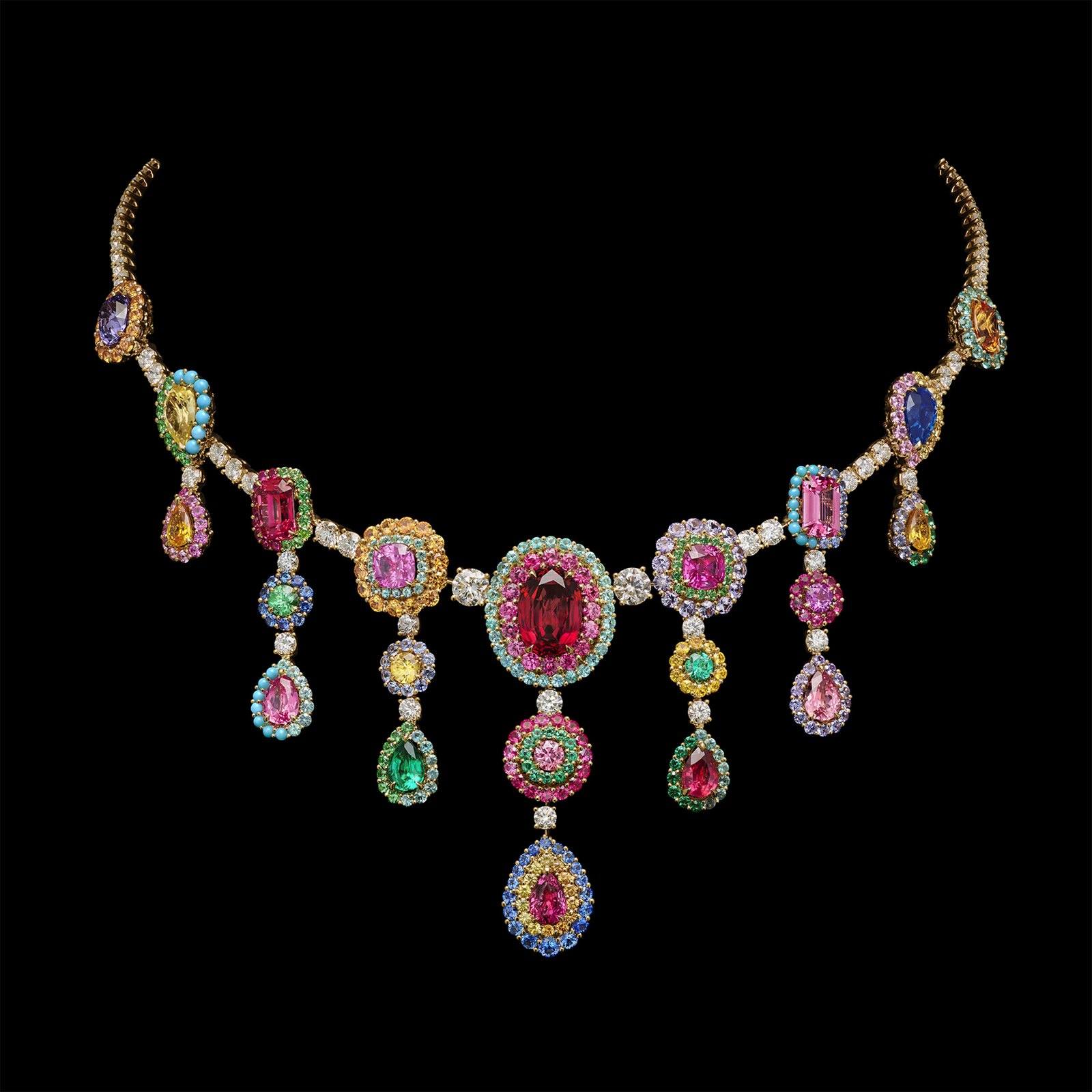
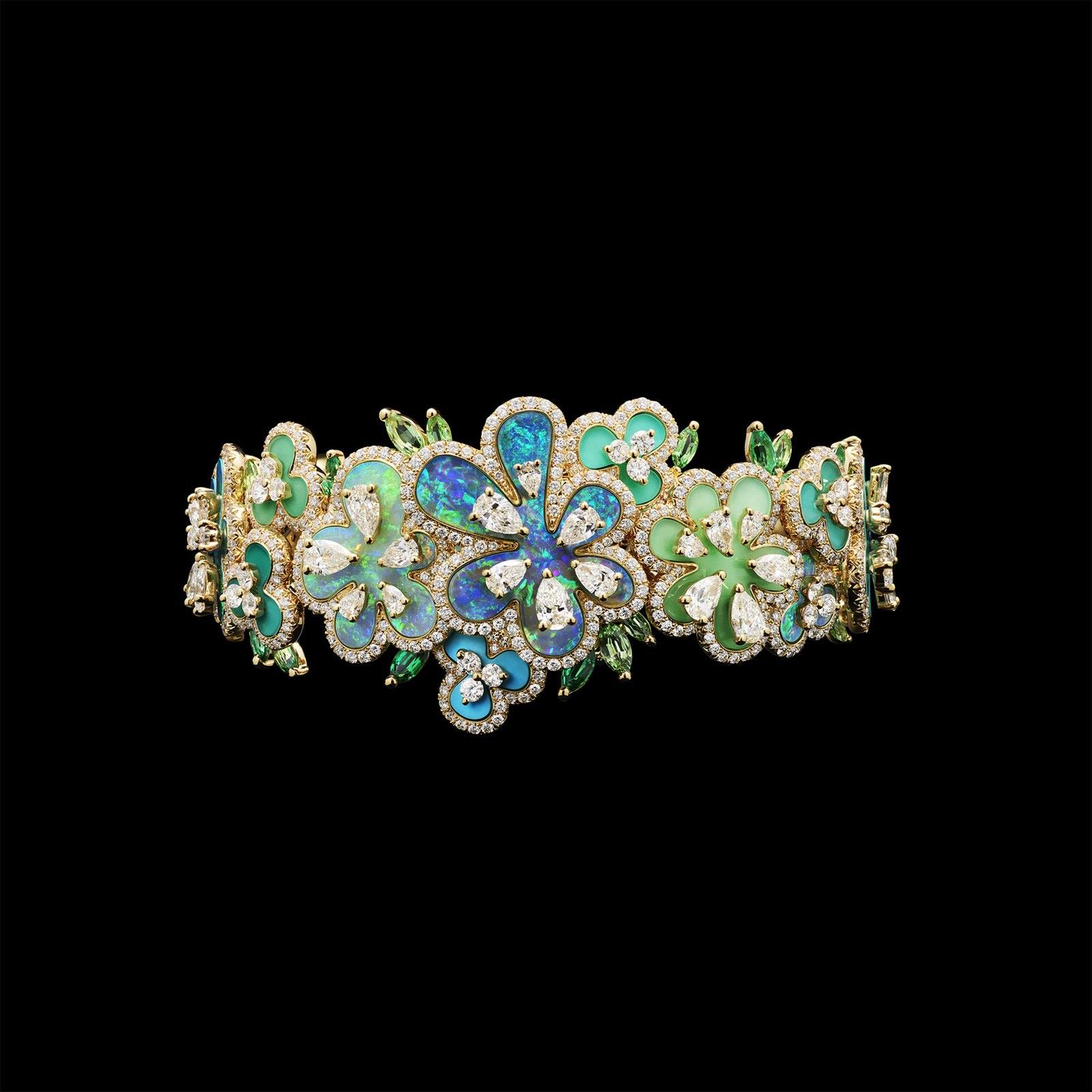
The botanical world leads: clover, wisteria and fruit, blossoms multiplying across necklaces, rings and bracelets in layered, overlapping patterns. Its monument is the Glycines bib necklace, a wisteria spray built from more than four thousand stones, Tanzanian pink spinels set with rubies and sapphires. The Lucky Clovers bracelet shows the collection's defining technique in miniature: doublets of green chalcedony on turquoise, chrysoprase on turquoise, chrysoprase on cacholong and opal on chrysoprase, one stone layered over another to reach colours nature never quite managed.
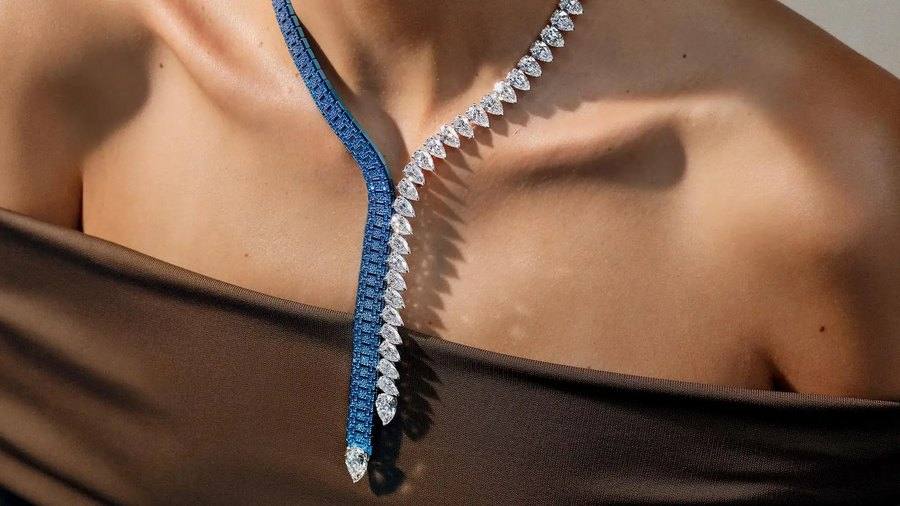
The aquatic world follows the water down: corals, fish, bubbles and seaweed in saturated blues and turquoise. The Fleur Aquatique necklace centres on a Paraíba tourmaline, its diamond layers edged in blue lacquer, an abstraction of water rather than an illustration of it. The Récif Fleuri necklace takes a 10.27 carat pear-cut blue sapphire as its centre and builds outward: more than thirteen hundred stones, over two thousand one hundred hours at the bench.
The celestial world completes the triptych. Suns, eclipses and clouds drift through the celestial world: the Voie Lactée necklace sets thousands of diamonds wheeling around a seven carat centre stone, its hair clip and earrings carrying the same Milky Way motif in pink gold and diamonds, fine as gown lace. The Nuage Heureux necklace pairs two clouds of white opal over turquoise with a yellow sapphire sun half-hidden behind them. The Sunset suite sets yellow and white diamonds with turquoise beads, cultured pearls and lacquer in white and yellow gold.
The gallery owner
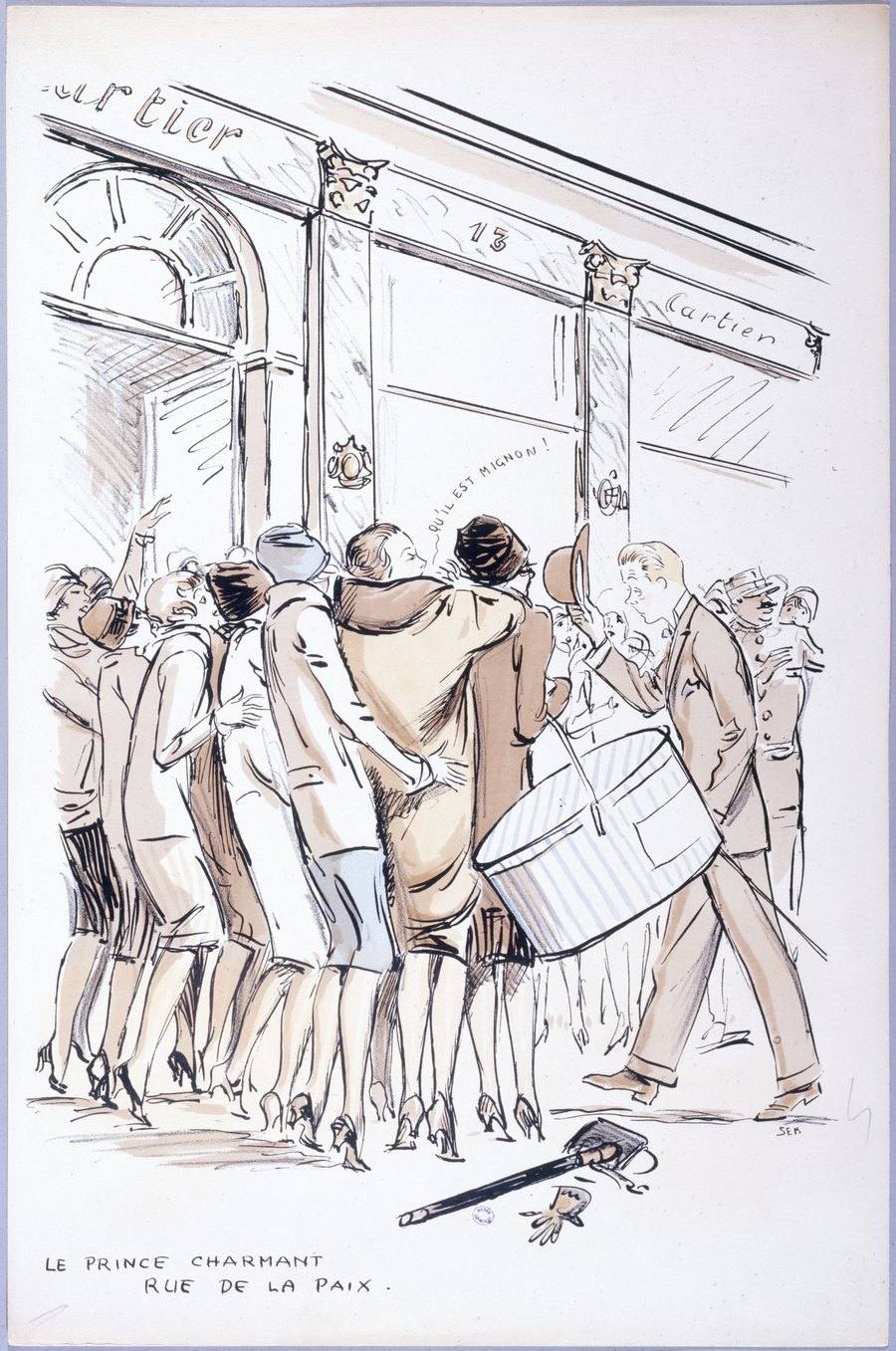
Dior describes the collection as a tribute to the art of collage and to the artists admired by Monsieur Dior, and for once the house mythology has a document behind it. Before he became Christian Dior the couturier, Christian Dior was an art dealer. At 23, in 1928, he opened a Paris gallery with his friend Jacques Bonjean on family money, with one condition: the Dior name could not go above the door. Picasso, Braque, Miró, Giacometti, Calder and Man Ray all passed through; Dior later partnered with Pierre Colle, the dealer who first showed Dalí's The Persistence of Memory. The gallery did not survive the early 1930s: with the family firm collapsed, Dior spent the next years selling fashion sketches to couture houses, and by 1934 he was drawing dresses for couturiers to pay the rent. Couture made his name, but the crash decided the profession.
That is the story de Castellane is telling with the stones. “I like to start with stories, or with a concept, because for me there has to be a new story with the jewellery,” she has said. Here the story begins back in M. Dior's early days: stones layered like brushstrokes, colours colliding in compositions that feel closer to collage than to classical jewellery design. “Nature and gardens are such a structuring theme in the history of Dior that we always go back to them,” she says. “They are also a major source of inspiration in jewelry; therefore, they have always been a recurring theme in my creations and a pleasure to explore.”
The framework and its edges
Technique is the collection's other argument. The doublet, layering one gemstone over another, runs through Diorissima: opal over chrysoprase, green chalcedony over turquoise, white opal on turquoise. Lacquer, Dior Joaillerie's long-standing signature, moves between opaque and transparent, pushing colour to the edge of what the stone can carry. “I love to work with colors and keep on expanding the horizons of this exercise,” de Castellane says. “The gemstone is the framework; I like to push its boundaries to the edge and enjoy myself with what I find there.”
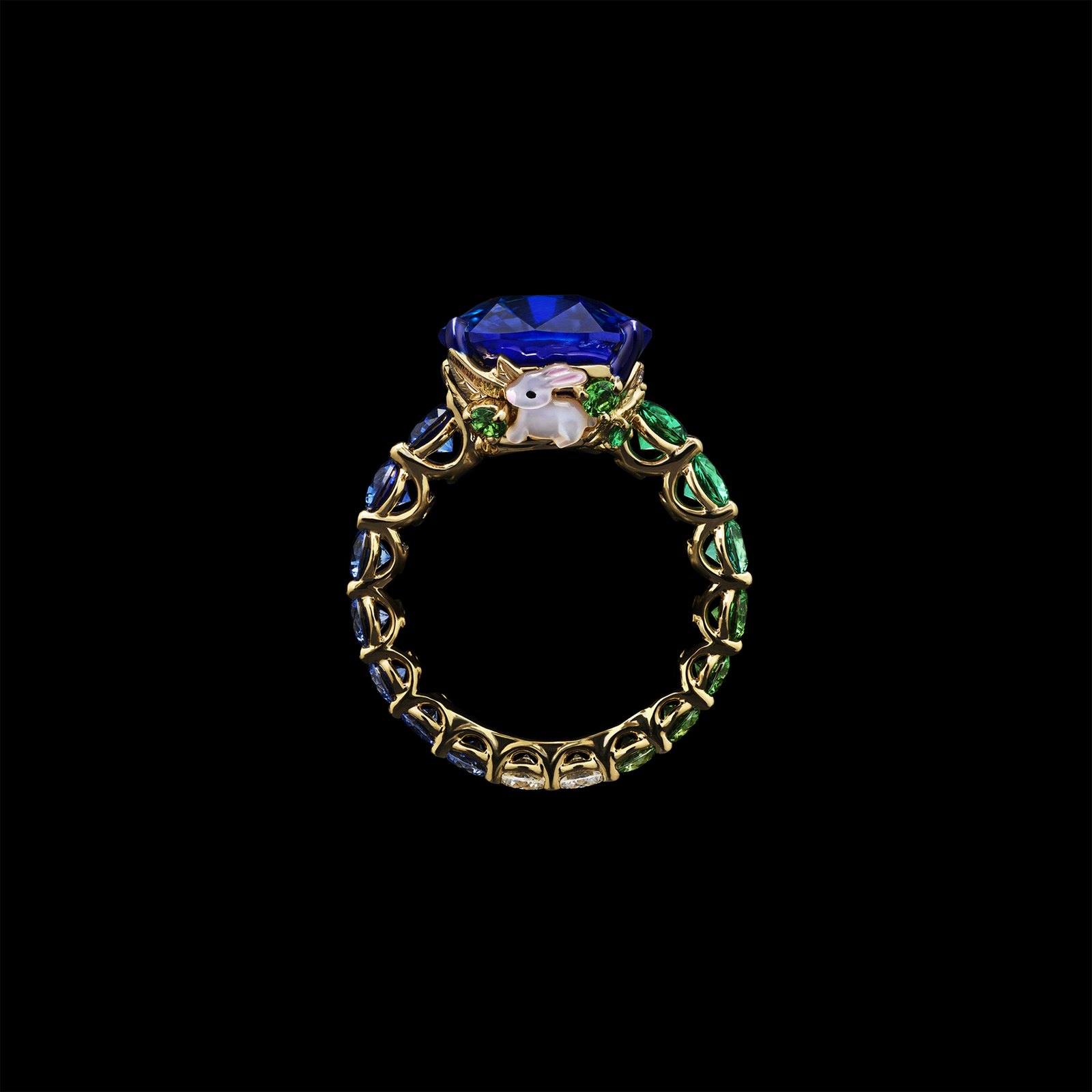
Her pieces have always refused to stay in one form: brooches turn into hair ornaments, belts unclasp into necklaces, and jewelled headbands and anklets let sapphire flowers and lacquer-and-diamond leaves trail through the hair in loose, off-centre arrangements. And there is a playfulness no press release quite captures: the Diorama sapphire solitaire ring conceals a bunny on its flank. Dior has called Diorissima “the very essence of the Dior dream.” The dream, it turns out, was painted before it was sewn. “To me, gemstones are one of nature's miracles,” de Castellane says. This time, they are also the record of the house's first profession.