The Habsburgs' Autumn: A Legendary Diamond Comes Out of the Vault
The 137-carat Florentine Diamond, missing for a century, is on public view for the first time in Quebec City. Three years ago, a separate Habsburg collection went under the hammer in Geneva. Two vaults, two cities, one family's jewels.

Some jewels are famous for being seen. The Florentine Diamond spent a century famous for not being seen. Cut at 137 carats and once among the great historic diamonds of Europe, it vanished from public life after the fall of the Austro-Hungarian Empire, and for decades the trade assumed it was lost, stolen, or broken up and sold. Since 4 September 2026 it has been sitting in a vitrine in Quebec City, in the first public display of fifteen House of Habsburg jewels, and visitors to the Musée national des beaux-arts du Québec are looking at a stone unseen in public for a century.
The museum defends memory, the auction room discovers price, and the stones are indifferent to both.
The stone that came back
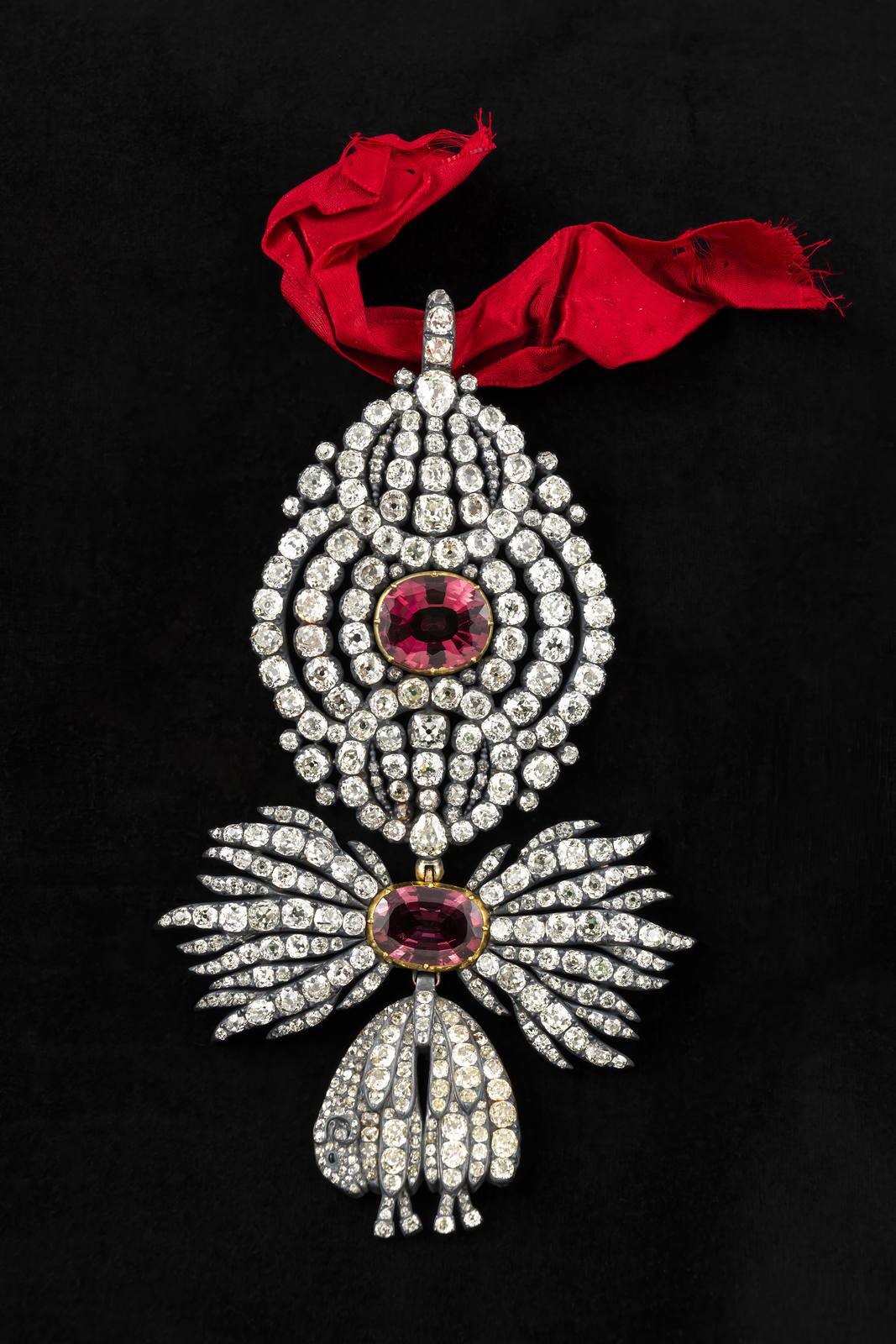
The exhibition is called Hidden Treasure: A Century of Mystery, and the title is literal. In 2025 Archduke Karl von Habsburg revealed that the Florentine Diamond and fourteen other historic family jewels, fifteen pieces in all, had been kept hidden for decades in a Canadian bank vault, held by the family's Saint Joseph Trust since the Second World War. The museum lists the Florentine at 2.6 by 2.6 centimetres, a yellow diamond of legendary size, and its reappearance closes one of the great open cases in jewellery history: the stone survived the twentieth century intact, in the dark, in Canada.
That it survived in Canada is not an accident of banking. It is the consequence of exile. Empress Zita of Bourbon-Parma, the last Empress of Austria and Queen of Hungary, fled the Nazi regime and found refuge in Quebec City in October 1940, settling at the Villa Saint-Joseph in Sillery. She travelled with the jewels. They stayed hidden in Québec for decades while the family rebuilt its life in exile, after the 1918 collapse of the empire and the death of Emperor Charles I on Madeira on 1 April 1922. The exhibition tells this as a four-part journey: the Habsburg legacy, the 1911 marriage of Charles and Zita, the imperial collapse, and the long years of exile.
Heritage as an argument
Québec's culture minister Mathieu Lacombe and Saint Joseph Trust trustee Andrew Molson have framed the display as a dialogue between heritage, memory and human resilience, and the framing matters. This is not a treasure show in the pirate sense. It is an exhibition about what objects carry when the world that made them is gone: the Florentine Diamond means one thing in an imperial crown and another in a Quebec vitrine, and the exhibition is honest about the distance between the two. Jewels are the most portable form of a lost world, and the Habsburg pieces are that idea made visible.
A different vault, a different sale
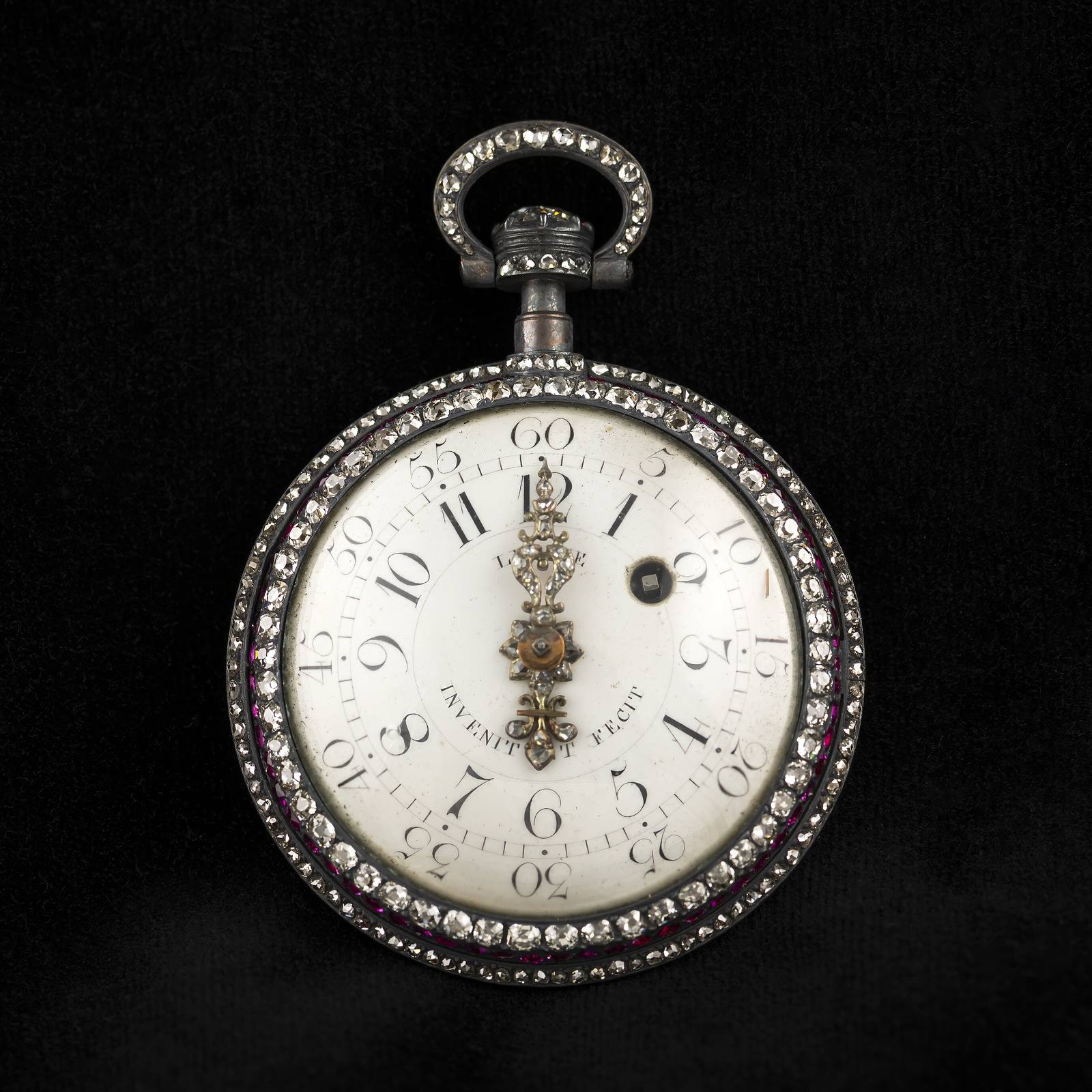
Three years before the Quebec opening, Geneva saw the other half of the Habsburg story, and the two must not be confused. Sotheby's sale Vienna 1900: An Imperial and Royal Collection, held on 6 and 7 November 2023, offered more than 200 Habsburg-linked royal jewels from a single owner, unseen publicly for nearly a century after their own discovery in a bank vault. The presale estimate was $3.3 to $5.6 million. These were not the Saint Joseph Trust jewels now in the museum. They were a separate family collection, and they were for sale.
The lead lot was a corsage ornament designed as a garland and set with natural pearls, presented to Archduchess Marie Therese of Austria-Teschen as a wedding gift in 1865. Sotheby's called it without a doubt the most significant nineteenth-century jewel to come to auction in recent years, and placed an upper estimate of CHF 450,000 on it. Andres White Correal, the house's deputy chairman and senior director of jewellery, called the collection arguably the most important Noble Jewels auction since the landmark sale of the Bourbon-Parma royal jewels in Geneva. The lots toured internationally before the sale: New York, Cologne, Paris, Hong Kong, Bangkok, Singapore, Dubai, Taipei and London.
There is a pleasing symmetry in the calendar. In Quebec, imperial jewels come out of a vault to be looked at. In Geneva, three years earlier, imperial jewels came out of a vault to be sold. Between them lies the whole modern history of the object: the museum defends memory, the auction room discovers price, and the stones themselves are indifferent to both, waiting out the century in the dark.